Finding a sunscreen that won't trigger breakouts used to feel like a losing battle. The formulas of a decade ago were thick, occlusive, and practically guaranteed to leave oily skin looking like a glazed doughnut by noon. Today, that landscape has shifted considerably. Lightweight, noncomedogenic SPFs are now widely available across every price point, and the technology driving them is more sophisticated than ever. Whether your skin leans oily, tends toward redness, or flares up with inflammation at the slightest provocation, there is now a formula designed with you in mind.
To identify the very best options, testers spent over a year working through dozens of widely recommended formulas – evaluating texture, finish, wearability under makeup, and, most importantly, whether any new breakouts appeared during testing. Dermatologists were also consulted throughout the process to pinpoint exactly which ingredients and formulations are safest for acne-prone skin types. Six products rose above the rest.
The Top Six Sunscreens for Acne-Prone Skin
- Best Overall: La Roche-Posay Anthelios UVDefense Sunscreen SPF 50 – $40
- Best Tinted: Supergoop Protec(tint) Daily Tint Sunscreen SPF 50 – $44
- Best for Oily Skin: Anua Zero-Cast Moisturizing Finish Sunscreen SPF 50 – $18
- Best for Redness: Hero Cosmetics Force Shield Superlight Sunscreen SPF 30 – $21
- Best for Inflammation: Sofie Pavitt Screentime Non-Comedogenic Hydrating Sunscreen SPF 30 – $38
- Best for Reapplication: Medicube PDRN Silky Sun Stick SPF 50+ – $22
Best Overall: La Roche-Posay Anthelios UVDefense Sunscreen SPF 50
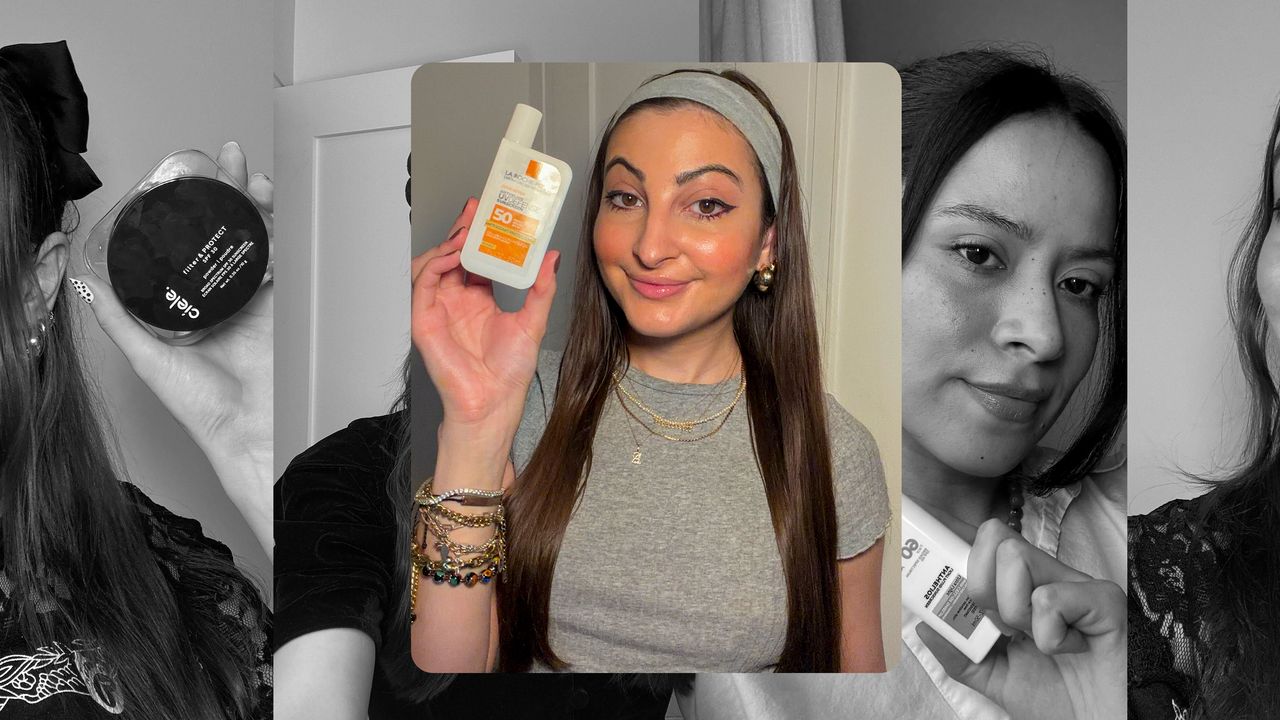
Of every formula put through its paces, the La Roche-Posay Anthelios UVDefense Sunscreen SPF 50 earned the top spot – and it did so convincingly. Priced at $40, this is a sunscreen that delivers on every front that matters for acne-prone skin: it's noncomedogenic, free of heavy residue, and leaves no white cast behind. It layers invisibly under foundation or other skincare products, making it as practical as it is skin-friendly.
The formula's standout feature is its use of bemotrizinol (BEMT), a newly FDA-approved UV filter that provides broad-spectrum protection while maintaining a genuinely weightless consistency. This is not a filter that has been widely available in U.S. formulations until recently, and its inclusion here marks a notable step forward in domestic sunscreen technology. Bemotrizinol allows for strong SPF coverage without the dense, film-forming texture that so often spells disaster for oily or breakout-prone skin types.
During testing, one evaluator with acne-prone skin reported zero new breakouts over a week of daily use – a meaningful result given that many conventional sunscreens had previously caused pimples for the same tester. The texture was described as milky and fast-absorbing, drying down to a soft matte finish that kept the skin looking calm and even throughout the day. Those with an oily T-zone noted that it provided adequate moisture without tipping into greasiness.
Dermatologists have long favored La Roche-Posay's Anthelios line for sensitive and reactive skin types, in part because many of the brand's formulas incorporate niacinamide, which helps reduce redness and inflammation associated with active breakouts. This particular formula is also fragrance-free, removing one more potential irritant from the equation. Active ingredients include avobenzone, bemotrizinol, homosalate, and octisalate. It is oil-free and available in a 1.7 fl. oz. size.
Best Tinted: Supergoop Protec(tint) Daily Tint Sunscreen SPF 50
For anyone who wants their SPF to multitask, the Supergoop Protec(tint) Daily Tint Sunscreen SPF 50 ($44) offers medium coverage that can realistically replace a tinted moisturizer or light foundation on lower-effort days. It was specifically noted for its ability to blur the appearance of active blemishes and even out discoloration – a quality that makes it especially appealing on days when skin is mid-flare.
What sets this formula apart from other tinted SPFs is its use of hyaluronic-acid-infused clay, an ingredient pairing that manages to hydrate while simultaneously absorbing excess surface oil. The result is a finish that reads as soft and matte without the flat, cakey quality that heavy-coverage products can produce. One to two pumps is typically enough to cover the full face, and it layers well with other products in a skincare routine. The main drawback flagged during testing was the price-to-size ratio – and the tendency to pill slightly if over-applied.
Best for Oily Skin: Anua Zero-Cast Moisturizing Finish Sunscreen SPF 50
At just $18, the Anua Zero-Cast Moisturizing Finish Sunscreen SPF 50 punches well above its price point. As the name suggests, it leaves no white cast – a particularly common frustration among deeper skin tones using mineral or hybrid formulas. Despite its moisturizing finish, it manages to stay comfortable on oily skin without contributing to excess shine. For budget-conscious shoppers who still need a reliable, acne-safe SPF, this is a standout pick.
Best for Redness: Hero Cosmetics Force Shield Superlight Sunscreen SPF 30
The Hero Cosmetics Force Shield Superlight Sunscreen SPF 30 was developed with reactive, easily inflamed skin in mind. Now available for as low as $13 (down from $21), it features an ultra-light consistency that sits comfortably on skin that tends to flush or redden. It has earned a loyal following among those who experience post-acne redness or whose skin flares in response to heavier formulas.
Best for Inflammation: Sofie Pavitt Screentime Non-Comedogenic Hydrating Sunscreen SPF 30
Esthetician Sofie Pavitt built her reputation on treating acne and hyperpigmentation, so it tracks that her SPF offering – the Screentime Non-Comedogenic Hydrating Sunscreen SPF 30 ($38) – is specifically formulated with inflamed skin in mind. The formula is hydrating without being occlusive, and its noncomedogenic credentials were central to its development. For skin that is actively broken out or recovering from a recent flare, this is a thoughtfully constructed option.
Best for Reapplication: Medicube PDRN Silky Sun Stick SPF 50+
Reapplying sunscreen midday is one of the most consistently skipped steps in any SPF routine, largely because it feels disruptive to makeup or simply inconvenient. The Medicube PDRN Silky Sun Stick SPF 50+ ($22) addresses that friction directly. Its stick format allows for quick, no-mess touch-ups over makeup without disturbing the base underneath. The inclusion of PDRN – polynucleotide, a skin-repairing ingredient derived from salmon DNA – gives it an additional appeal for skin prone to post-breakout scarring or slow healing.
What to Look for in a Sunscreen If You Break Out Easily
Dermatologists consistently flag a few key criteria when recommending SPF products for acne-prone skin. First, look for the word noncomedogenic on the label – this indicates the formula has been tested and found not to clog pores. Second, oil-free formulations are generally a safer starting point for oily or combination skin types, though some oils (like squalane) are considered low-comedogenic and may be tolerated well.
In terms of ingredients to avoid, coconut oil, isopropyl myristate, and certain silicones have been associated with pore congestion in sensitive skin types. Fragrances and essential oils are also worth avoiding, as they can trigger irritation and inflammation that worsens existing acne. For those dealing with fungal acne specifically – a condition caused by an overgrowth of yeast rather than bacteria – it is worth checking that a formula does not contain fermented ingredients or fatty acids that can feed Malassezia, the yeast responsible for fungal breakouts.
On the SPF level question: a minimum of SPF 30 is recommended for daily use, with SPF 50 preferred for extended outdoor exposure. For acne-prone skin specifically, the SPF number is less important than the texture and ingredient list – an SPF 50 that clogs pores is far less useful than a well-formulated SPF 30 that your skin actually tolerates.
A Note on Acne Scars and Sun Protection
One of the most important – and most overlooked – reasons to wear sunscreen daily when you have acne-prone skin is the role UV exposure plays in worsening post-inflammatory hyperpigmentation. Those dark marks left behind after a pimple heals can darken significantly with sun exposure, making them far more difficult to fade. Consistent daily SPF use is one of the most effective things you can do to prevent new discoloration from forming and to allow existing marks to fade more quickly over time.