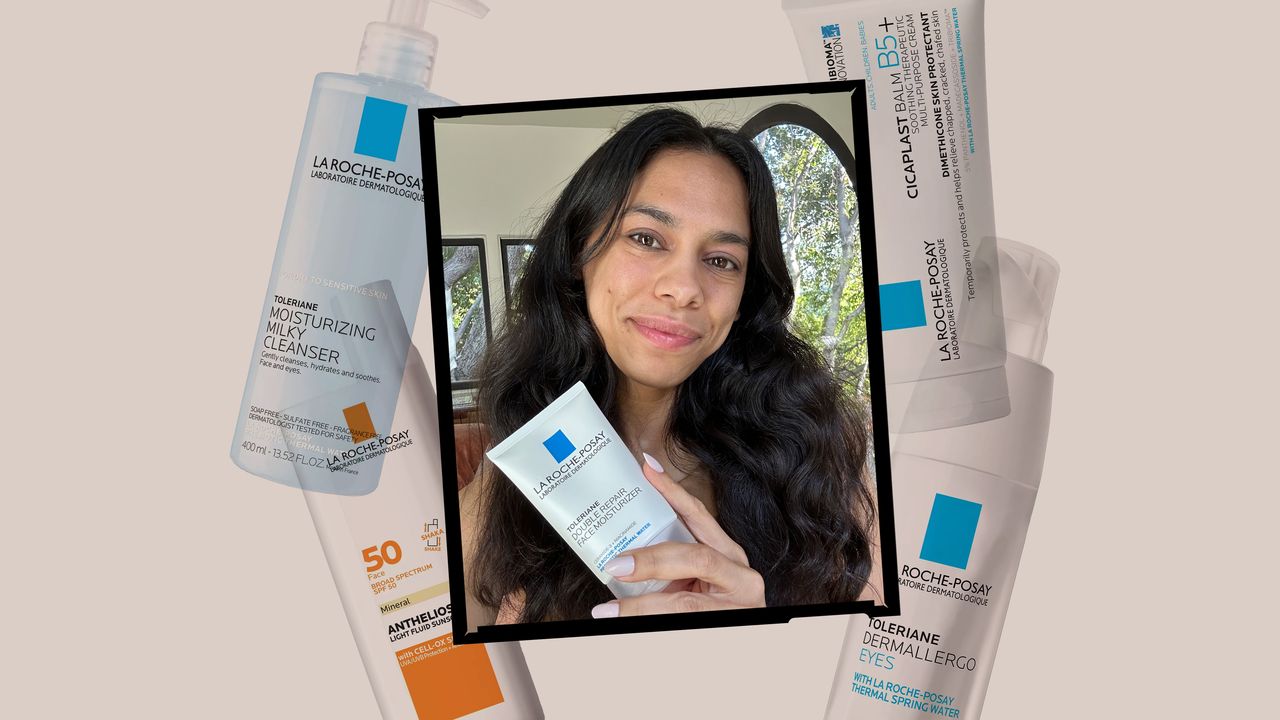
If there is one brand that dermatologists, beauty editors, and award judges seem to agree on without much argument, it is La Roche-Posay. The French pharmacy staple has built a decades-long reputation on formulas that genuinely work for sensitive, reactive skin without stripping, stinging, or costing a small fortune. Whether you are newly navigating a compromised skin barrier or have been buying the same cleanser on repeat for years, the brand keeps finding ways to earn a spot in your bathroom cabinet.
A lot of that loyalty comes down to one signature ingredient: thermal spring water sourced directly from the town of La Roche-Posay in western France. Naturally rich in selenium – an antioxidant mineral – the water has a calming effect on stressed skin and forms the backbone of nearly every formula the brand produces. It is a simple idea, but it has proven to be an effective one, and it helps explain why the brand resonates so strongly with people whose skin reacts badly to almost everything else.
That said, La Roche-Posay is far from resting on a single heritage ingredient. The brand has been pushing forward in meaningful ways, and right now, the development generating the most conversation is a regulatory one. The brand's latest Anthelios sunscreen features bemotrizinol, also known as BEMT – the first new UV filter to receive FDA approval in the United States in over 25 years. For a category that has long felt frozen in time compared to what sunscreen formulators in Europe and Asia have had access to, that is a significant shift.
Anthelios UVDefense SPF 50 Sunscreen with BEMT
BEMT has been a fixture in European and international sunscreen formulas for years, but American products have had to work around its absence – until now. What makes it noteworthy is its ability to address both UVA and UVB rays, including the longer UVA wavelengths most closely linked to premature aging. Many older chemical filters protect against one end of the spectrum more effectively than the other, so a broad-spectrum filter that handles both with genuine efficiency is a meaningful addition to the formulator's toolkit.
BEMT is also photostable, which means it holds up under sun exposure rather than breaking down and losing efficacy over time. According to cosmetic chemist Kelly Dobos, that stability gives formulators greater flexibility. Because BEMT delivers high levels of protection at lower concentrations, there is less need to pile in multiple UV filters at heavy doses just to hit an effective SPF. The result is the kind of lightweight, non-greasy texture that makes daily sunscreen use far more realistic for most people.
La Roche-Posay's version – the Anthelios UVDefense SPF 50 Sunscreen – pairs BEMT with a supporting cast of filters including avobenzone, octisalate, octocrylene, and homosalate, alongside what the brand calls its Cell-Ox Shield Technology. That antioxidant blend includes lychee extract, alteromonas ferment, senna alata leaf extract, and vitamin E, and it is designed to help neutralize free radicals produced by both UV exposure and everyday pollution. The brand claims the formula can intercept up to 80% of the skin-damaging molecules triggered by UVA rays, with antioxidant activity lasting up to 16 hours.
In practice, the texture is notably fluid – closer to a serum than a traditional sunscreen – and it absorbs quickly without leaving a white cast or greasy residue. For anyone with combination skin who finds full moisturizer-plus-SPF layering too heavy outside of the coldest months, this formula can comfortably pull double duty. It is fragrance-free and untinted, and finishes with a natural, balanced look rather than a dewy glow.
Key details: Chemical formula. Key ingredients: 2% BEMT, 3% avobenzone, 5% octisalate, 6% octocrylene, 11% homosalate, Cell-Ox Shield technology (litchi extract, alteromonas, cassia senna alata, vitamin E), glycerin, butylene glycol, dimethicone. Fragrance-free. Not tinted. Not water-resistant. Retails for approximately $40.
Toleriane Moisturizing Milky Cleanser
On the opposite end of the complexity spectrum sits the Toleriane Moisturizing Milky Cleanser, a 2026 Best of Beauty Award winner that makes its case with just nine ingredients. For anyone who has ever read a cleanser label and felt overwhelmed by the sheer number of components, this formula offers a quieter alternative. It removes makeup and daily buildup effectively without destabilizing the skin's moisture barrier – which is, frankly, more than many far more complicated cleansers can claim.
The formula relies on glycerin to help skin retain hydration through the cleansing process, while ethylhexyl palmitate – a lightweight emollient – gives it that characteristic milky texture and slip. La Roche-Posay's thermal spring water appears here too, keeping the formula true to the brand's soothing philosophy. The result is a rinse-off cleanser that leaves skin feeling soft and settled rather than tight and stripped, which is exactly what sensitive skin needs from a first or second step. It is also completely fragrance-free, which removes one common trigger for reactivity before it even becomes an issue.
Hyalu B5 Suractivated Face Cream
The Hyalu B5 Suractivated Face Cream is built around a well-established pairing: hyaluronic acid and vitamin B5, also known as panthenol. Together, they address two of the most common complaints in dry and sensitized skin – a lack of surface hydration and a compromised barrier that struggles to hold moisture in. Hyaluronic acid draws water to the skin, while panthenol supports repair and resilience over time. The formula sits comfortably in moisturizer territory without feeling heavy, making it a practical option for daily use across a range of skin types.
Mela B3 Dark Spot Corrector Serum
The Mela B3 Dark Spot Corrector Serum brings niacinamide – vitamin B3 – to the foreground in a formula designed to visibly reduce the appearance of hyperpigmentation and uneven tone. Niacinamide has become one of the most reliably well-tolerated brightening ingredients available, which makes it a natural fit for a brand focused on skin that reacts poorly to more aggressive actives. The serum format allows for targeted application and layering flexibility within a wider routine.
Lipikar AP+Max Triple Repair Moisturizing Cream
For dry skin on the body – particularly the kind that itches, flakes, or feels perpetually uncomfortable – the Lipikar AP+Max Triple Repair Moisturizing Cream is one of La Roche-Posay's most consistently recommended offerings. The formula combines shea butter with niacinamide and glycerin to restore and reinforce the skin barrier while delivering lasting moisture. It is the kind of body cream that earns genuine loyalty from people dealing with eczema-prone or very dry skin, and at around $22, it remains one of the more accessible options in its category.
Why La Roche-Posay Keeps Earning Its Place
What ties all of these products together is a shared design philosophy: effective formulas that do not ask sensitive skin to tolerate unnecessary irritants in exchange for results. That consistency – across cleansers, serums, moisturizers, and now a sunscreen featuring the first newly approved UV filter in a generation – is what keeps both dermatologists and everyday users returning to the brand. The thermal spring water is a constant thread, the fragrance-free commitments are real, and the price points remain reasonable enough that building a full routine does not require difficult trade-offs.
For anyone with reactive, dry, or barrier-compromised skin, La Roche-Posay continues to be one of the more reliable places to start – and, for many, one of the very few places they need to shop at all.