Most people understand that sunscreen guards against sunburn and UV damage. What fewer people appreciate is just how much the best face sunscreens can accomplish beyond that baseline protection. Today's standout formulas are frequently packed with antioxidants to neutralize free radical damage, hydrating actives like hyaluronic acid, and brightening agents such as vitamin C that work quietly on dullness and dark spots while the SPF does its primary job.
Dermatologists are enthusiastic advocates for this kind of multitasking. Jenna Queller, MD, a board-certified dermatologist and founder of DermWorks in Boca Raton, Florida, puts it plainly: "UV exposure is the leading cause of premature skin aging, sun damage, and skin cancer, so daily sunscreen is one of the most effective antiaging steps someone can take." That's a strong statement, and the science backs it up completely.
The problem has never really been about knowing you should wear SPF. It's about finding a formula you'll actually reach for every single morning without dread. Greasy finishes, thick white casts, formulas that pill under foundation, textures that feel like a coating of cooking oil – these are the very real reasons people skip sunscreen, and they matter. A sunscreen you won't wear consistently is not a sunscreen doing its job.
To cut through the noise, a testing team worked through dozens of dermatologist-recommended face sunscreens, evaluating them for texture, finish, compatibility with different skin types, and wearability under makeup. The six options below emerged as the clearest winners across a range of concerns and skin types.
The Six Best Face Sunscreens
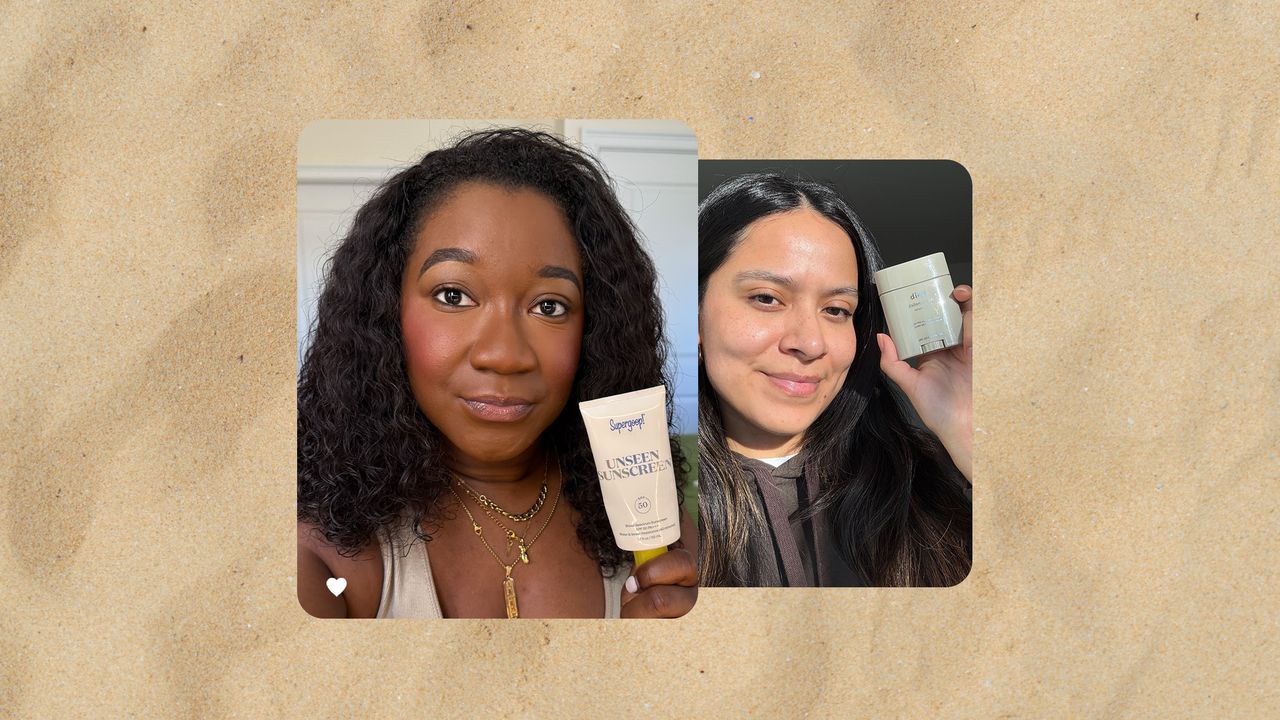
Best Overall: Supergoop Unseen Sunscreen SPF 50 – $38
Supergoop's Unseen Sunscreen has earned its reputation many times over, and a recent formula upgrade from SPF 40 to SPF 50 broad-spectrum protection makes a strong product even stronger. Marisa Garshick, MD, a board-certified dermatologist based in New York City, calls it "a weightless, invisible gel formula that doubles as a primer, making it perfect for makeup application." That assessment holds up under real-world testing.
The consistency is a clear, medium-bodied gel that absorbs on contact without pilling or skipping across the skin. Once it settles, it leaves a soft matte finish that controls shine throughout the day – particularly useful along the T-zone. Makeup sits smoothly on top, and makeup artists frequently reach for it specifically for its blurring and smoothing effect. It contains ceramides for an added hydration benefit. Critically, it disappears entirely on application, leaving no visible cast on any skin tone. For combination skin especially, it's difficult to find a formulation that performs this well across every metric simultaneously.
- SPF type: Chemical
- SPF rating: 50
- Water-resistant: No
- Size: 1.7 fl. oz.
Best for Under Makeup: La Roche-Posay Anthelios UVDefense Sunscreen SPF 50 – $40
La Roche-Posay has long been a dermatologist-favored brand, and the Anthelios UVDefense formula reflects exactly why. It features bemotrizinol, a newer FDA-approved UV filter that offers particularly broad-spectrum coverage. The formula is lightweight and rubs into skin almost invisibly, making it an ideal canvas for foundation or tinted moisturizer. The one caveat worth noting is that the consistency runs slightly thin, so dispensing carefully matters. For anyone who has struggled to find a sunscreen their makeup will actually cooperate with, this is a reliable answer.
Best for Acne-Prone Skin: Byoma Ultralight Face Fluid SPF 50 – $19 (on sale from $15)
Acne-prone skin has historically been underserved by sunscreen formulations, which often lean heavily on oils and occlusive ingredients that clog pores or trigger breakouts. Byoma's Ultralight Face Fluid addresses that gap directly. At under $20, it's one of the most accessible options on this list, and its non-comedogenic, fluid texture sits comfortably on skin that doesn't tolerate heavier products. It's the kind of everyday SPF that works without requiring careful monitoring of how your skin responds to it.
Best for Reapplication: Abib Airy Sunstick Smoothing Bar SPF 50 – $28 (on sale from $18)
Reapplication is where most sunscreen routines fall apart. Liquid and cream formulas are messy to reapply over makeup midday, which means many people simply don't bother. The Abib Airy Sunstick Smoothing Bar solves that friction point entirely. The stick format glides cleanly over skin and makeup alike without disturbing what's underneath, making it practical to use at a desk, in a car, or anywhere else a full skincare refresh isn't realistic. SPF 50 protection in a genuinely portable format is a combination worth prioritizing.
Best Tinted: Beauty of Joseon Tinted Mineral Dayscreen SPF 30 – $20
Tinted sunscreens occupy a useful middle ground between skincare and makeup, and Beauty of Joseon's Tinted Mineral Dayscreen does the job with minimal fuss. The mineral formula uses physical UV filters rather than chemical ones, which makes it appealing for those who prefer that approach or whose skin reacts to chemical filters. The tint adds a subtle evening of skin tone without the weight of foundation, and the $20 price point makes it easy to commit to daily use without hesitation.
Best for Sensitive Skin: EltaMD UV Skin Recovery Red Color Correcting Face Sunscreen SPF 50 – $53
EltaMD is a brand with deep roots in professional dermatology, and the UV Skin Recovery formula reflects that heritage. It's designed specifically for reactive and sensitive skin, incorporating a red color-correcting tint that visually neutralizes redness while the SPF 50 formula protects. For anyone managing rosacea, post-procedure skin, or chronic sensitivity, this addresses both the protective and cosmetic concerns at once. The higher price point reflects a formula that has been developed with clinical precision and ingredients gentle enough for genuinely compromised skin barriers.
What Dermatologists Want You to Know About SPF
Across the board, dermatologists recommend a minimum of SPF 30 for daily face use, with SPF 50 preferred for extended outdoor exposure or for those with a higher skin cancer risk. Both mineral and chemical sunscreens provide effective broad-spectrum protection when formulated correctly – the choice between them often comes down to skin sensitivity and personal preference rather than a meaningful difference in efficacy. What matters far more than which filter technology you choose is whether you're applying enough product and reapplying consistently throughout the day.
As Dr. Queller notes, the antiaging case for daily SPF is one of the strongest in all of skincare. No serum, cream, or treatment corrects sun damage as efficiently as preventing it in the first place. The six options above make that prevention considerably easier to maintain – because the best sunscreen, ultimately, is the one you'll actually put on.