Kayali Steps Into the Chinese Market With Intention
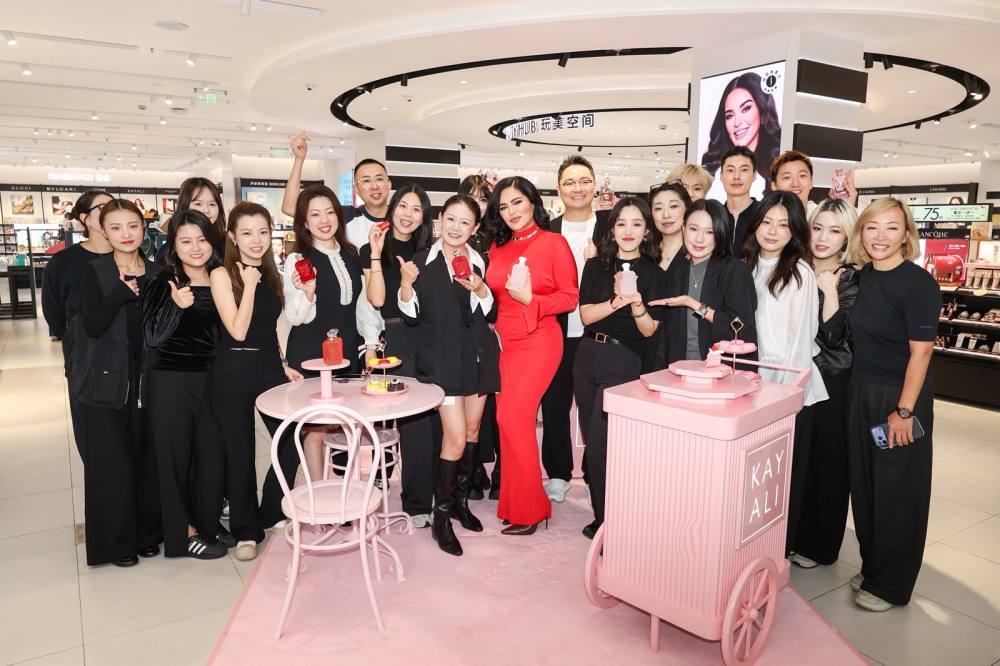
After two years of groundwork, Dubai-based fragrance brand Kayali has officially entered the Chinese market through an exclusive partnership with Sephora, spanning more than 300 retail doors. The rollout is accompanied by dedicated in-store space and access via Sephora's WeChat Mini Program store – a combination designed to meet Chinese consumers wherever they already shop.
The launch is not simply a geographic expansion for the brand. Kayali founder and chief executive officer Mona Kattan traveled to Shanghai to personally lead the opening push, attending meet-and-greets with Sephora beauty advisers, hosting intimate scent layering demonstrations, and immersing herself in local retail culture. Her approach signals something intentional: this is a brand that wants to earn its place in China, not just occupy shelf space.
Seven Cult Scents Lead the Opening Lineup
The initial assortment features seven of Kayali's best-known fragrances: Vanilla 28, Yum Boujee Marshmallow 81, Musk 12, Freedom Musk Santal 34, Eden Juicy Apple 01, Eden Sparkling Lychee 39, and Fleur Majesty Rose Royale 31. Nine additional scents are set to join the lineup throughout November, progressively widening the brand's presence for Chinese shoppers exploring the collection for the first time.
The selection reflects Kayali's signature aesthetic – a world of gourmand, layerable fragrances that the brand has long described through its own shorthand: "sweet overload, joy explode." Whether that ethos will translate directly to Chinese consumer tastes is something Kattan says she is still learning, and she is openly comfortable with that uncertainty.
Patience Over Volume
"We're patient, we want to build our local community slowly, we are not here just to move volume, we are here for the long run," Kattan said during her Shanghai visit. It's a statement that cuts against the typical pressure to post immediate results in one of the world's largest beauty markets.
Kattan has been doing her homework. She sampled local desserts – noting their characteristically restrained sweetness – and her team has been actively researching Chinese cultural preferences rather than arriving with assumptions baked in. She described Chinese consumers as "very studious and research-driven," a trait she clearly respects. "We want to help people become perfume experts," she said. "I think Chinese consumers have already mastered skin care, fragrance has to come next."
Her observation points to something real: skin care has long dominated the Chinese beauty conversation, with consumers building elaborate multi-step routines and developing sophisticated ingredient literacy. Kattan sees fragrance as the next frontier for confident self-expression – a category still finding its footing in daily life for many consumers.
Scent Layering as Cultural Conversation
One of the centerpieces of Kayali's launch activity in Shanghai was a Scent Lab event where Kattan walked local beauty voices through fragrance combinations, demonstrating how layering two or more scents can shift mood and meaning. Scent layering has been gaining traction in Chinese consumer culture as an approach that allows for personalization and experimentation – both values that align naturally with Kayali's brand identity.
"People should know what they like and what they don't like, so they can make better decisions," Kattan said. The philosophy is less about selling a single signature scent and more about empowering consumers to build their own olfactory vocabulary.
Kattan also noted a cultural shift she finds encouraging. "In my part of the world, we were probably held back in many different ways, not really with perfume, but with clothing – seeing that change was great. In its own way, there's a different shift I see in China, where people are able to be bold with fragrance and not feel like that's rude, which is really cool," she said.
Building the Brand Behind the Brand
The Shanghai trip extended beyond Sephora events. Kattan hosted a masterclass alongside singer and creator Harrison Yu, and spent time exploring the city's retail landscape – including a visit with the founder of Documents, a Chinese label known for its deeply narrative approach to product design rooted in traditional Chinese culture. Kattan was taken with the brand's car scent and diffuser, and didn't hold back: "We should do a collaboration," she said.
These moments of genuine curiosity reflect both Kattan's personality and a broader strategy. Sephora has been actively cultivating connections between international brand founders and Chinese independent creators, an effort its leadership describes as cross-pollination.
"What we would like to do is to make sure that all the great creativity can cross-pollinate, and this is what we've been doing for many years with many, many brands," said Agnes Brissiaud, Sephora's vice president of global merchandising for fragrance and hair care. "We want to continue to bring what we believe is the most curated assortment that clients would want, both from international brands but also Chinese founder brands," she added.
The Long Arc of Building a Fragrance Brand
Behind Kayali's careful, community-first expansion strategy is the practical reality of how the brand builds its products. Working with DSM-Firmenich, the development cycle for a single Kayali fragrance averages around two years, with the oil formulation alone requiring roughly 18 months. That timeline demands a long-range perspective – not just for product development, but for market building.
Kattan's long-range thinking extends further still. She has spoken openly about her dream of eventually bringing fragrance development fully in-house, citing Chanel and Zara as reference points for vertical integration done at scale. "My dream is to take everything in-house, which requires a lot of investment and even more risk," she said. "Maybe 10 or 15 years from now."
For a brand that has built its reputation on a deeply personal, founder-led identity, that patience feels less like a limitation and more like a defining characteristic. In China, as elsewhere, Kayali appears to be playing a long game – and betting that genuine connection will outlast any short-term sales sprint.