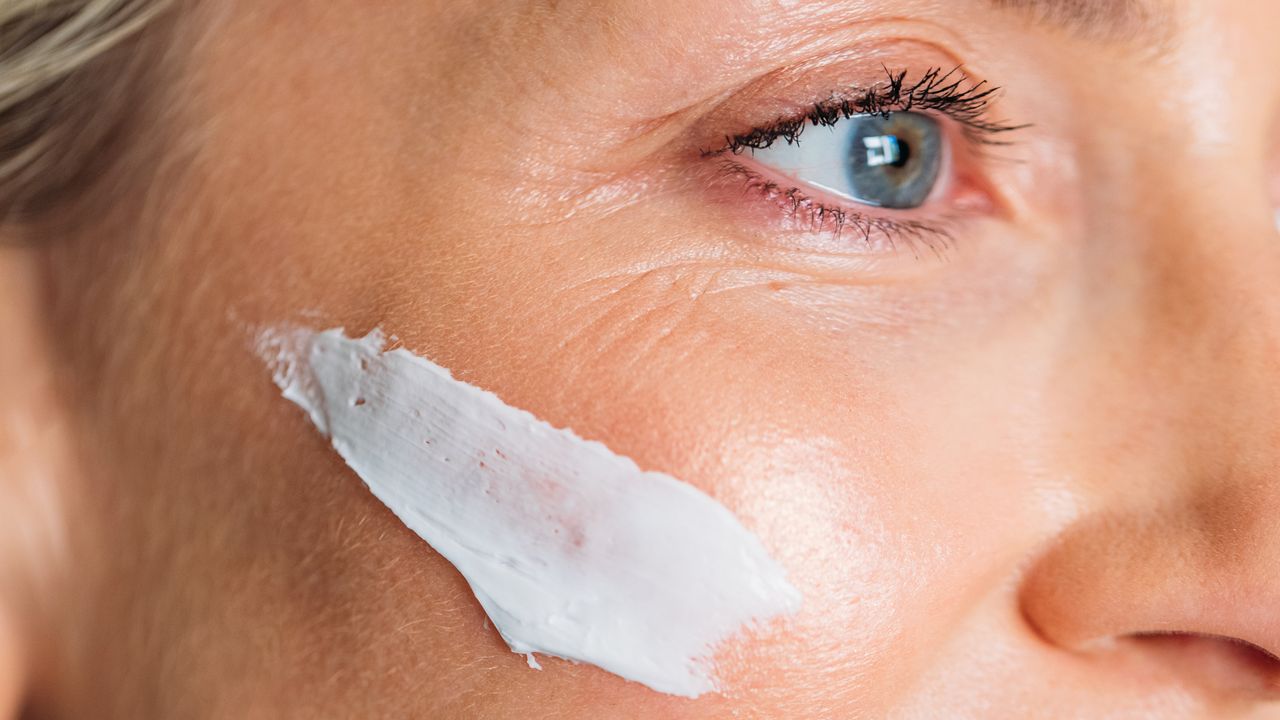
Keenya Kelly is used to fielding compliments about her skin. At 45, the Houston-based video marketing strategist fields them more than ever – which is remarkable given how dramatically things changed when perimenopause arrived in her 30s. Almost overnight, the oily, plump complexion she had always known turned, in her words, "almost like a Brillo pad." A friend suggested she try an estrogen-infused moisturizer. Now, a year into nightly use of an estrogen cream sourced through the telehealth platform Musely, Kelly has a ready answer when people ask what she's done differently. "It's just estrogen," she tells them.
She is far from alone in turning to hormone-laced skincare – or in the confidence with which she attributes her results to it. Scroll through social media long enough and you might conclude that estrogen creams have become a standard step in the midlife skincare routine, endorsed by menopause influencers and looksmaxxing devotees with equal enthusiasm. The products promise to restore collagen, improve elasticity, and reverse the particular dullness that tends to accompany the hormonal upheaval of perimenopause. But how well does that promise hold up under scrutiny?
The Perimenopause Market Has Arrived
Increased public conversation around perimenopause and menopause has done real good. Women who once endured hot flashes, brain fog, and disrupted sleep in silence now have language for what they're experiencing, communities to connect with, and a wider understanding of available treatments. That visibility matters. But it has also attracted significant commercial attention.
A recent report on what some analysts have called the "perimenopause industrial complex" found that four major telehealth startups focused on this life stage saw web traffic surge by 490 percent between 2023 and 2026. Most of these platforms do not accept insurance, and some charge up to $200 per month for custom hormone therapy. Among the offerings: topical skincare creams containing estrogen, marketed as collagen-boosting, skin-plumping interventions. The message, amplified loudly across social platforms, is that hormonal skincare is not a fringe experiment – it's what savvy, well-informed women are doing now.
The reality, as reported by dermatologists, gynecologists, and cosmetic chemists, is considerably more complicated.
What Estrogen Actually Does for Skin
To understand the appeal of topical estrogen, it helps to understand just how much this hormone does for the skin when levels are healthy. Estrogen supports the thickness and suppleness that give skin its youthful firmness. It activates fibroblasts – the cells responsible for producing collagen – and helps the body preserve the collagen it already has. As estrogen begins to fluctuate during perimenopause and then decline sharply with menopause, the skin often pays a visible price.
"There's evidence that collagen levels start to decline very gradually even before menopause occurs," says Emily Lebowitz, MD, a board-certified dermatologist in New York City. That gradual decline accelerates during the perimenopause transition, leaving skin thinner, less elastic, and more prone to dryness and fine lines. For many women, these changes are among the most noticeable early signals that their hormonal landscape is shifting.
It makes intuitive sense, then, that replenishing estrogen topically might help reverse or slow those changes. And that's precisely the logic that has driven the popularity of two types of estrogen now appearing in skincare formulas: estradiol and estriol.
Estradiol vs. Estriol: Understanding the Difference
These two forms of estrogen are not interchangeable. Estradiol binds more strongly to estrogen receptors and produces more potent effects. It is the active ingredient in vaginal estrogen creams – typically formulated at 0.01% – which are well-studied, widely prescribed by gynecologists, and considered a standard treatment for vaginal dryness during the menopause transition.
Estriol is the weaker of the two. It binds less aggressively to estrogen receptors and is the form more commonly used in topical skincare formulations, usually at a concentration of 0.3%. These creams also typically contain conventional skincare actives – hyaluronic acid, peptides, and similar ingredients – alongside the hormone.
The distinction matters not only for efficacy but for risk. Estradiol's stronger systemic activity raises more concern among physicians when used outside its established, studied applications. Estriol's lower potency is part of why it has become the default choice for cosmetic formulations – though, as experts are quick to note, lower potency does not mean the evidence is more solid.
What the Research Actually Shows
Here is where the enthusiasm collides with the data. A recent review of existing clinical trials examining topical estrogen for skincare found that most controlled studies failed to demonstrate reproducible improvements in visible aging. Safety data, the review's authors noted, "remain inconclusive." Their recommendation to clinicians: proceed with caution before advising patients to use these products.
That's a significant caveat for a category generating this much consumer excitement. Several dermatologists who reviewed the research landscape raised concerns about cancer risk – particularly for women with a personal or family history of hormone-receptor-positive breast cancer, for whom estrogen-containing products of any kind warrant careful medical consideration. Jacqueline Marecheau, MD, a board-certified ob/gyn and chair of obstetrics and gynecology at Episcopal Health Services in New York City, notes that while estrogen's effects on skin are real and well-documented, translating systemic hormonal science into topical skincare efficacy is not a straightforward leap.
Board-certified dermatologists Corinne Erickson, MD, of Atlanta, and Justine Park, MD, of Thousand Oaks, California, both emphasize that the absence of reliable trial data makes it difficult to make firm recommendations in either direction. The products exist in a grey zone: not without theoretical biological rationale, but also not backed by the kind of evidence that would ordinarily support confident clinical endorsement.
Access Is Easy – But That's Not the Same as Safe
Despite the unresolved questions, obtaining an estrogen skincare cream is not difficult. Some dermatologists prescribe them off-label through compounding pharmacies, where formulations are customized to individual specifications. Telehealth platforms – including Musely, Alloy, and Midi – allow consumers to order them directly after an online consultation. The convenience is real. So is the gap in oversight.
Cosmetic chemist and educator Kelly Dobos points out that compounded formulations are not subject to the same regulatory scrutiny as FDA-approved drugs, which means concentration accuracy, ingredient stability, and absorption rates can vary meaningfully between products. "Weaker" estrogen at the wrong concentration, or in a base that drives deeper skin penetration than intended, may not behave as predictably as patients or prescribers assume.
The Broader Picture
None of this means estrogen skincare is without merit, or that the women using it – and reporting visible improvements – are imagining things. Placebo effects in skincare are well-documented and genuinely powerful. The co-formulated ingredients like hyaluronic acid bring established hydrating benefits of their own. And for some individuals, under careful medical supervision, the risk-benefit calculation may well favor a trial.
What it does mean is that the social media narrative – that estrogen cream is the obvious, well-supported answer to menopausal skin changes – outruns what the clinical evidence currently supports. Board-certified cosmetic dermatologist Viktoryia Kazlouskaya, MD, of Dermatology Circle in New York City, and cosmetic dermatologist Debra Jaliman, MD, both stress the importance of individualized medical assessment rather than trend-driven adoption.
The perimenopause conversation is one worth having loudly and openly. But separating genuine medical progress from market opportunity requires asking harder questions than the algorithm typically encourages. When it comes to putting estrogen on your face, the honest answer is still: we don't know enough yet – and that's worth knowing.